Posted on

The Parrotlet diet – overview

We recommend a varied diet with some (or all) of these key elements:  

Seed
Small Parrot mix or Diet Parrot Mix should always be made available. Seed husks must be removed every few days.  

Supplements
Avian Vitaliser powdered supplement should always be included in the seed supply. Cuttlebone is also necessary for calcium.

Pellets
To support growth, all parrotlets up until at least six months of age need a high protein pellet like Avian Pro Vita.  

Fresh water
Your parrotlet’s water should be changed at least daily. We recommend the addition of Multivet with Moulting Aid to your parrotlet’s water for two (non-consecutive) days per week during moulting. This will ensure your bird does not retain uncomfortable and unsightly ‘pin feathers’ for long periods.  

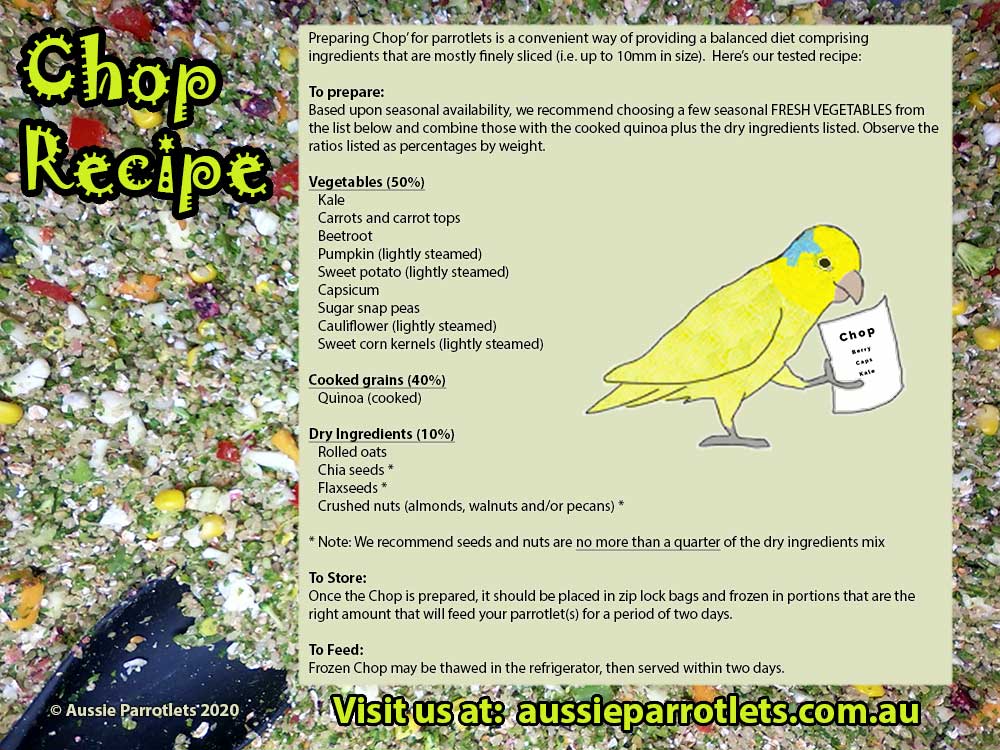
Chop
Certain vegetables, grains, fruits, seeds and nuts are important for your parrotlet’s health. Parrotlet ‘Chop’ is a great way to provide these in balance, with convenience. Simply use the ingredients from the recipe below whenever they are in season. Here is our recipe.  

Treats
Treats such as celery, beetroot leaves, silver beet, millet sprays, raspberry, strawberry or guava can be offered daily although fruits are recommended only occasionally.

Wild foods
Wild foods are FREE and provide your bird with both nutrition and an enriching source of activity. These should be collected from a source area known NOT to have been sprayed with herbicides. Looking around creek beds is a good option. To learn more, see this article.  

Sprouts
Sprouts are an optional, highly nutritious food source that are enjoyed anytime. Full instructions may be found here.  

If you’re starting out with a new bird, then a great place to start is with the Essentials Starter Pack.

Also important to know:
NEVER feed the following…

Potentially lethal:
avocado
chocolate

UNHEALTHY (never feed):
Fatty, salty, processed human foods
dairy products
tea
coffee
alcohol
Posted on

Training you parrotlet

So what tricks can parrotlets learn?… Here are 20 great examples in this awesome video from Flock Talk …

We bet you can’t wait to see these tricks performed for you. Well, with patience these are all possible! It’s worth pointing out though that training a parrotlet takes time and patience. By always moving GRADUALLY through the training process and never stressing the bird with forced steps, the all-important parrotlet/owner trust remains intact. ALWAYS observing this patience is crucial for the training to progress.Small amounts of training often is best if you wish to continually progress.

Parrotlets are individuals and their willingness/ability to learn may vary, however when engaged, they are very intelligent and willing learners.To start, begin by talking to your parrotlet in a voice like you would use to read a small children’s story. Then, once he or she is comfortable in your presence, entice your parrotlet to the cage side with treats. Eventually,  you may wish to entice him or her to step out of their cage into a bird safe space.

You may wish to speak to your avian veterinarian regarding a light wing clip if the bird has reached at least 10 weeks of age. This is a painless process that achieves three things:

  1. your parrotlet will no longer achieve dangerously high speeds in  enclosed living spaces, thereby minimising collision risk
  2. any potential accidental release will be more easily resolved, however the parrotlet may fly away (slowly) if unnoticed
  3. your parrotlet will be more likely to interact and bond with you (although this should still be a GRADUAL process of trust building)

After a few months (and then 1-2 times each year) when your parrotlet moults, new full length flight feathers will replace the clipped ones. To retain clipped wings, see your avian veterinarian for a new clip.

Alternatively, you may wish to do some training such as recall/stationing or laps. Or you may have a familiar bird safe space where the bird can fly without becoming frightened by anything. In this case, you might want to let the new flight feathers grow.

Keep in mind though: there is still some risk of collision or injury in enclosed spaces if your parrotlet is spooked, or in a unfamiliar or unsafe area. Please see the article on Bird Safe Space for further important information.

Once your parrotlet is out of the cage in a familiar bird safe space, ensure you are practising ‘stepping up’ often and repeatedly so your parrotlet will step up when needed.

Young parrotlets are known to playfully bite their owner’s fingers a little too hard. This occurs especially when they are excited, with new people, or if they lack chewing enrichment items. Young parrotlets usually require reinforcement of the ‘gentle beak’ training technique as soon as possible whilst in early training. A quick fix is to wet your fingers first and your parrotlet should go easier on you.

To explore the best methods to train your bird, we recommend the YouTube channel ‘Flock Talk’. A good start would be to find out the basics of conducting successful parrotlet training…

Once you get started training your parrotlet, sharing your experiences and learning from others will make it all the much more enjoyable. A couple of Facebook groups of companion parrotlet owners that are highly active and supportive are found HERE and HERE.

Good luck with the highly rewarding art of training!

Posted on

IMPORTANT Toy Safety

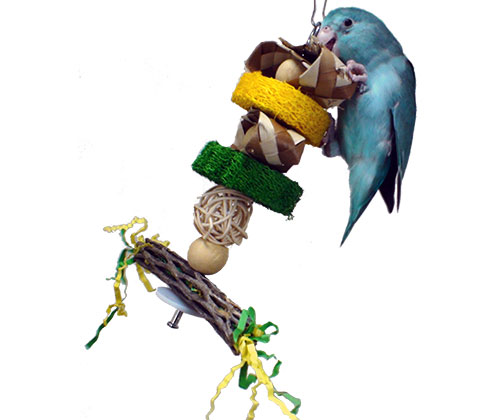
All companion parrotlets benefit greatly from the enrichment that toys bring. It’s not always easy however to find safe, appropriately sized and affordable parrotlet toys. In fact, it has taken considerable research, in consultation with avian veterinarians and parrotlet owners to find solutions. As a result, Aussie Parrotlets offers only the safest toys for your parrotlet.

The key safety principles that toys offered by Aussie Parrotlets uphold are:

No cotton

Cotton fibre is known to have been ingested by birds chewing on cotton-based toys. Unfortunately, this cotton fibre can accumulate in your parrotlet’s crop over time, eventually leading to a fatal obstruction. Instead we sell toys made with sisal or rattan fibre as this is a significantly safer alternative.

No “Birdie Huts”

Birdie huts are a tempting addition to your parrotlet’s cage; however, these can induce nesting behaviours that may lead to fatal egg-binding in females and aggression in male parrotlets.

No concrete or sandpaper perches

Aussie Parrotlets only recommend and sell perches that are comfortable and appropriately sized for your parrotlet. We do not sell concrete perches as these are too firm for bird’s feet. We do not sell sandpaper perches as these can cause foot sores which lead to infection.

No inappropriately large toys

Not only are all toys on this site specified for optimal safety, they are of course all appropriately sized for your parrotlet… After all, your parrotlet is what Aussie Parrotlets is all about!

No toxic Zinc plated steel

Avian Veterinarians have known for decades of the dangers of zinc toxicosis in birds. The problem stems in part from the fact that most of the steel used in bird toys is zinc-plated (galvanised) steel. Similar issues exist with aviary mesh too. Considering this, Aussie Parrotlets sells only toys containing higher quality safe nickel-plated (stainless) steel instead.

No unnecessary waste

Better still, we support the sustainable use of resources as the steel parts in the toys we sell are reusable rather than disposable. Simply order a refill kit for selected toys to reuse the stainless-steel part. Alternatively, the stainless steel mounting prongs may be re-used as fruit serving sticks.

A note on getting the best from your parrotlet’s toys

Now that we have the right toys… It’s important to get the most out of them. The purpose of toys is to promote engagement and avoid boredom. To achieve this end, the best tip is to rotate a different toy(s) into the cage weekly.

Whilst changing toys over, be sure to check your parrotlet’s toys to ensure they are still in good condition. Be sure to discard and replace the toys your parrotlet has destroyed (as he/she should!), or if any aspect of the toy has become unsafe.

OK, so now that’s all clear, why not check out the toys category


Posted on

Bathing

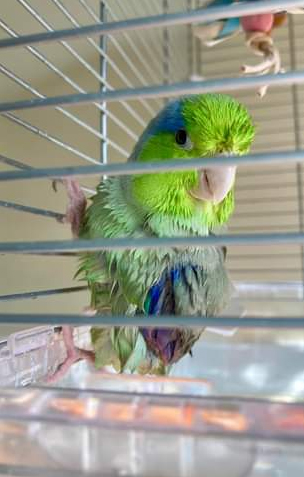
Bathing is important for parrotlets to maintain their plumage. This should be encouraged early in the day when temperatures are expected to be reasonably warm.

Many parrotlets like to take a dip in their water bowl, so we use these to provide water. The act of changing the water can often be a prompt to bathe.

CAUTION: don’t provide only self-filling tube water feeders as your new parrotlet may completely fail to drink from one of these (having never seen one before).

Not all parrotlets will bathe in their water dish. If not, we recommend a lukewarm water misting. Direct the mist from a new, clean spray bottle over your parrotlet, so mist falls from above.

Posted on

The Cage

Choosing the right cage

Look for these features:

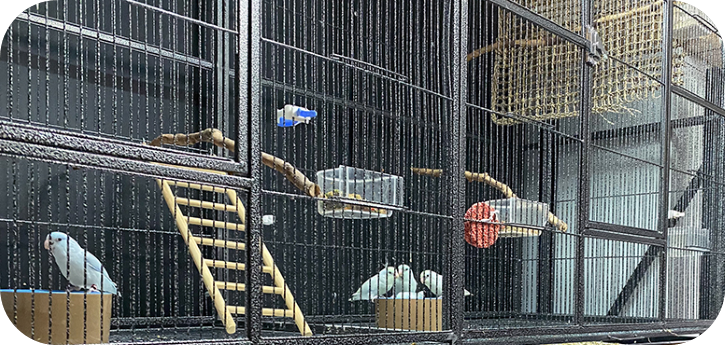
• length (>70cm) is more important than height

• wheels are ideal for ease of movement

• up to 13mm bar spacing is safe

• a removable wire grill over a waste tray is key for hygiene

Getting settled

Be set up before your bird arrives so they can settle in quickly.

Posted on

Wild Foods

We have probably all thought to ourselves: “What new treats are out there to offer my bird?” Well, if you are seeking inspiration for greater VARIETY, then look no further than the wild!

Wild foods are a valuable addition to your parrotlet’s diet because they are:

  • an excellent source of micro nutrients
  • an enriching source of activity to devour
  • a source of that all-important VARIETY (to answer the earlier question!)
  • completely FREE to acquire

With a little research and exploration of your local area, wild foods will be found in abundance. They may be collected from any land you are free to enter. Simply looking around creeks, parks or your own yard can yield a harvest.

To start you on your wold foods journey, here are some ideal Australian wild foods to look for. To learn more, simply click the links, then click on the photos to view larger images.

·         Milk Thistle (Sonchus oleraceus L.)

·         Green Amaranth (Amaranthus Viridis)

·         Curled Dock (Rumex Crispus)

·         Dandelions (Taraxacum Officinale)

·         Chick Weed (Stellaria Media)

·         Johnson’s Grass (Sorghum halepense (L.) Pers.)

·         Wild Panicum (Panicum Decompositum)

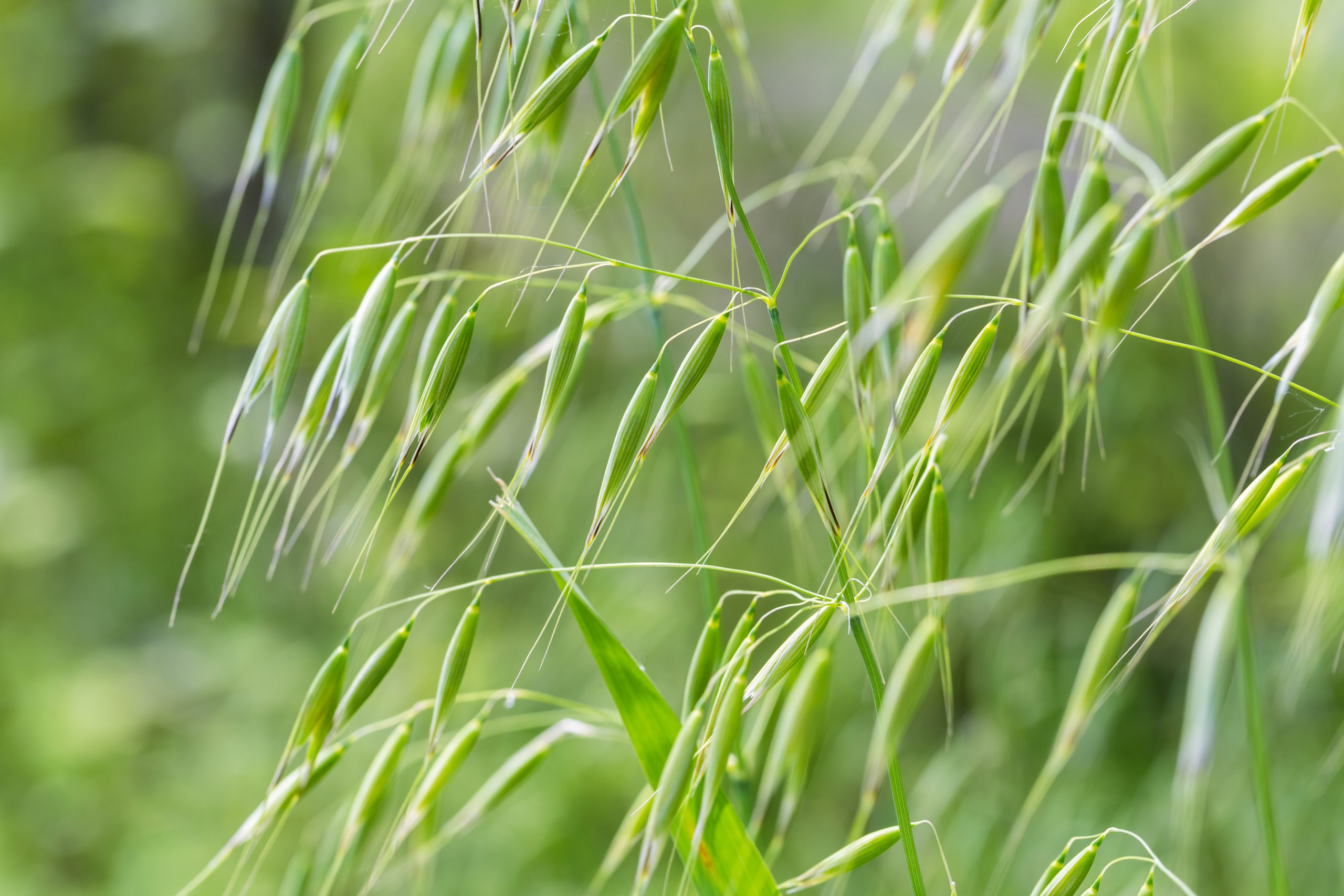
·         Wild Oats (Avena Fatua)

·         Rapeseed (Brassica napus)

·         Canary grass (Phalaris Canariensis)

·         Crowsfoot grass (Eleusine indica)

·         Whisker grass (Cyperus gracilis)

·         White Foxtail (Pennisetum Villosum)

·         Blackberry Nightshades (Solanum nigrum L.)

·         Cobbler’s Pegs (Bidens pilosa)

Whilst finding wild foods is both of great benefit to your bird and a good way to spend time in the great outdoors, there are a couple of challenges with collecting and feeding wild foods. These are: the potential threat of poisoning from herbicides and the problem of seasonality.

It’s important to note that the harvest source must be an area known NOT to have been sprayed with herbicides (i.e. weed killers). It may not be clear initially as if the area was sprayed with a herbicide recently, the grass may look healthy, however the herbicide may not have taken effect yet.

The thought may occur to you that these wild foods are all seasonal. Don’t despair! Simply grab your bag and harvest plenty to be frozen for later use. Up to around three months in the freezer is fine. Whilst you are at it, any ‘bonus’ insects will be killed by the freezing process and therefore unable to invade your home!

Coming back to the herbicide issue: A way of countering the risk of undetected herbicides is to wait a few days after freezing the wild food, then observe the grass (where you harvested). Make sure it is not showing any signs of die-off from herbicide exposure. Once this is confirmed, THEN feed the wild food.

We hope you enjoy getting out and learning about and identifying wild foods for your parrotlet. Special thanks goes to Martin Thorn for his wonderful depth of knowledge in contributing the list of wild foods. All of the links above are courtesy of local council and government authorities.

Posted on

Thinking of breeding Parrotlets?

parrotlet-chicks

Spoiler alert: Only experienced breeders need apply

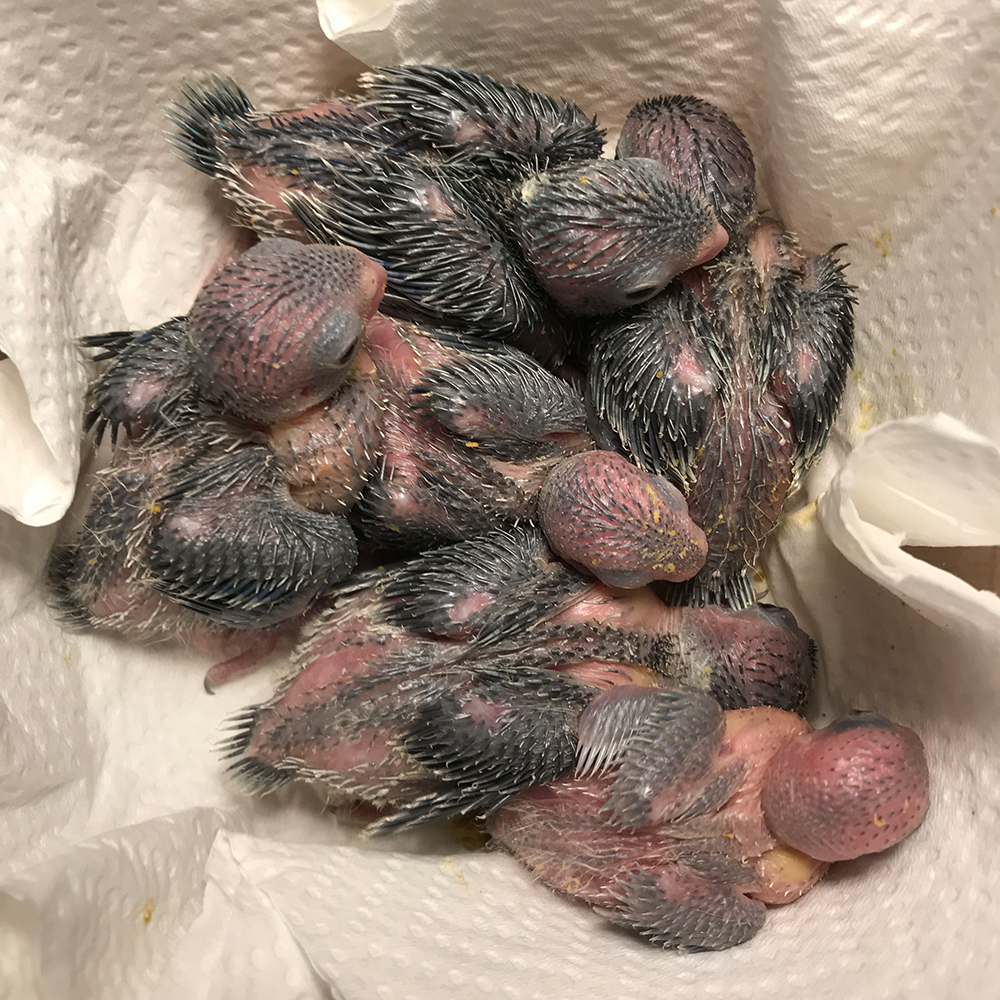
Of the entire animal kingdom, 95% of birds and only 5% of mammals (including humans) are the only creatures that form long term partnerships. The reason for this difference is because of the necessity to raise altricial young. Parrotlets for example, produce totally immature offspring. These altricial young parrotlets are naked (of feathers), blind, helpless, and in need of long-term care; usually for anywhere up to six weeks from hatching. It is therefore this long-term investment in relationships that have allowed both birds and humans to evolve.

This production of altricial offspring is thought to explain the heightened levels of intelligence seen in both birds and humans because the longer the young spend under parental care outside of their mother, the longer their brain has to develop. In fact, a bird and human brain grows to between eight to ten times the size at hatching/birth, compared to all other species who raise precocial young that increase brain size by a mere two to three times.

Thinking about how FAST this growth occurs, and the fact that the brain uses an astonishing 60% of all nutrient intake, it is no wonder that parrotlet parents are kept busy feeding their young. This is not to mention the requirement for maintenance of their young’s body temperature through virtually constant contact with the naked chicks (i.e. brooding). Then there is the incredibly low parent body weight to egg/chick weight ratio with parrotlets.

Unfortunately, parrotlet parents will not always meet these demanding feeding and brooding requirements. There can be many reasons for this such as: a lack of parenting skills/experience, poor diet, illness or death of a parent, or (in light of the above) just due to the high demands of a large nest of more than four chicks. The average nest is around five chicks incidentally. Any such circumstances may present a requirement for the birdkeeper to hand-raise one or more parrotlet chicks to ensure their survival.

As parrotlets are the smallest captivity bred parrots, they are NOT easy to handle for hand raising, especially under emergency conditions with chicks that are less than 14 days of age. Because such dire circumstances cannot be predicted, the only humane thing to do is to be fully prepared for these kinds of eventualities in advance…

It is therefore the view of the author that ANY birdkeeper breeding parrotlets, whether or not they intend on hand-raising the young, must have the following BEFORE allowing parrotlets to breed:

  • personal experience in hand raising of small or medium sized birds
  • a brooder cabinet
  • feeding equipment
  • Hand-raising formula
  • sufficient time/availability to administer five feeds per day for up to six weeks of age

Maintaining an adequate hand-feeding routine and correct brooder temperatures for the hand-raising of parrotlet chicks is both crucial and demanding. These factors can determine the survival or demise of parrotlet offspring within mere hours.

To ensure the health and wellbeing of parrotlets, the specifics for parrotlet breeding such as parent diets, housing, supplementation, dealing with complications such as egg-binding and hand-raising of parrotlets are topics which ought to be thoroughly researched in advance. Even then, parrotlet breeding ought only be attempted by experienced bird breeders with available foster parents, time/resources for hand-raising, or experienced hand-raisers at the ready.

Some may disagree, saying: “No it was easy for me”… and that may be true. Perhaps they had perfect parrotlet parents who raised the young. But it is only easy until the time when it is not.

Posted on

Daily Health Checks

To substantially reduce the potential for serious or fatal illness, all parrotlet owners should make a quick check of their parrotlet(s) and their surrounds for signs of illness daily.

Signs of Illness

Sadly, sick birds can easily be missed until it is too late. This is because as a survival instinct, wild birds will naturally attempt to maintain a normal appearance for as long as possible. Our pets retain this instinct, so to guard their health we need to make daily checks. In doing so, we should observe the less obvious signs such as abnormalities in regard to: droppings, appearance, breathing, posture, movement, food/water intake, fertility, weight, feather changes, or decreased vocalisations.

Evaluation of droppings

Your bird’s droppings are a good indicator of health. But to evaluate them, it is important to be familiar with the three parts they are comprised of:

    1. faecal – the solid part that is often brown in colour, but diet variations affect this
    2. urate – the solid urine component that is often white in colour
    3. urine – a clear liquid urine (this is sometimes difficult to see, and it may also have been absorbed by the cage liner)

The characteristics of normal vs. abnormal droppings are outlined below: 

Normal droppings

      • Seed diet produces black or dark green faeces
      • Formulated (e.g. pellet) diets produce soft brownish faeces
      • Diets high in vegetables and fruit may increase the white (urate) component

Abnormal droppings:

      • decrease in the number and volume of droppings
      • colour of the urates change to green or yellow
      • increase in the urine portion
      • decrease in the faeces to urate ratio
      • presence of blood
      • presence of whole grain

If you spot something that concerns you, some tips are:

    • place a clean white cage liner to improve visibility and focus on new droppings
    • observe the droppings for a whole day to rule out normal variation
    • make a tentative appointment with your avian veterinarian (cancel if not needed)

Early signs of disease

Signs that require non-urgent investigation by an avian veterinarian include:

    • prolonged moult or continual presence of pin feathers
    • broken, bent, picked, or chewed feathers
    • unusual or dull feather colour
    • stained feathers over nares or around the face or vent
    • crusty material in or around nostrils
    • redness, swelling or loss of feathers around eyes
    • flakiness on skin and beak
    • sores on underside of claws
    • lameness or shifting of body weight
    • overgrowth of beak or nails
    • low reproduction

Signs of Serious Illness:

Signs that require first aid and urgent medical support by an avian veterinarian include:

    • significant change in droppings
    • decreased or excessive food or water consumption
    • change in behaviour
    • fluffed posture
    • decreased vocalisation
    • abnormal breathing
    • weight change
    • swellings on body
    • bleeding or injury
    • vomiting or regurgitation
    • discharge from nostrils, eyes, or beak

Emergency First Aid

Arrange to see an avian veterinarian as soon as possible and have an appropriate carry cage to transport your bird safely.

Heat at 28-32 degrees C + humidity is a necessary support for all seriously ill birds. This can be achieved with a “hospital cage” and your avian veterinarian can provide access to one.

Always encourage seriously ill birds to eat and/or provide a crop feed (by an experienced person such as a veterinarian).

Administer electrolyte and energy (glucose) supplementation by dripping water prepared with Spark into the beak using a 3ml Plastic Pipette or eye dropper.

Take away messages

In summary, to reduce the potential for serious or fatal illness in your parrotlet(s) the important messages to take away are:

But there’s more to it!

This article addresses disease detection and initial management; however, disease prevention is just as important. Stay tuned for an article on “Preventative Health” coming soon…

Article contributor:

Dr Ron Woodhead B V Sc

Published by Aussie Parrotlets on 27/05/2020

All rights are reserved by the author


Posted on 1 Comment

Bird Safe Home

This article has many tips on preparing a Bird Safe Home for your parrotlet.
It is very important that each and every aspect below ought to be addressed BEFORE introducing your parrotlet to the space it will co-inhabit with humans.

The presence of other animals (e.g. dogs) will present a major risk in any case as parrotlets are both small enough to be easily injured and at the same time very likely to be a little overbearing to the point of provoking aggression. The combination with humans works, but all other animals need not apply.

If ever, it is when introducing a bird to a new home that one should consider having the wings lightly clipped by an avian veterinarian. This practice is explained in the article ‘Training Your Parrotlet‘.

Another HUGE factor in your parrotlet’s safety is ensuring NO OPEN EXTERNAL DOORS or UNCOVERED WINDOWS in the home. These are the main culprits in escapes and potentially fatal collisions respectively. Develop (in advance) good habits for all householders to keep doors and windows closed. Use drapes, blinds, or shades to cover windows to avoid flight into an uncovered windows when your parrotlet is out in the space.

ALWAYS ensure you can 100% supervise out of cage time as parrotlets are very small and can be easily missed and subsequently injured if not seen underfoot or around tight spaces.

Be aware of the risks posed by young children, animals and unfamiliar guests. Remember that your parrotlet will likely be afraid of new people, so taking your parrotlet out and showing him/her off to a guest is most likely stressful for the bird and may result in a fright. This is when birds can have accidents or collisions as they flee at great pace.

Turn off all fans whenever the bird is out of the cage!

Birds are HIGHLY susceptible to the fumes emitted from Teflon/non-stick cookware/appliances and self-cleaning ovens. This can prove fatal very quickly, usually when these are overheated, but even beforehand in some cases. The fumes can potentially travel beyond the kitchen, so it’s a case of just ditching the old Teflon cookware I’m afraid.

Electrical cables, chemicals, heat sources, open toilets and other drowning hazards, pesticides, toxic plants, smoke, essential oils and candles are all potential hazards that must be eliminated and/or monitored.

There’s a bit here to be aware of… Again, keep in mind that these issues need to be addressed BEFORE you welcome a parrotlet into your home.

Wishing you many happy and safe times with your parrotlet!